Quick answer: Warm up by moving gently, rehearsing your squat and increasing the load gradually without tiring yourself out. Use the early sets to check the rack, range and readiness, not to prove the day's maximum.
How to Warm Up for a Heavy Squat Session
Training · 26 October 2026
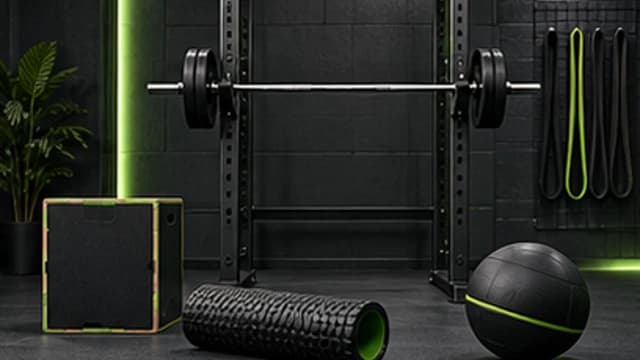
Check the rack before the warm-up
Set the hooks and safeties for your body and intended depth with qualified instruction. Test them lightly. Check that the floor is clear, plates are secured as appropriate and you know how to finish the set. A warm-up cannot compensate for an unsafe rack or unfamiliar lifting technique.
Raise activity gradually
A few minutes of easy cycling or walking can be a starting option. NSCA describes a general warm-up followed by movement-specific preparation, with the aim of preparing without causing fatigue. The exact duration depends on the person, environment and session. You do not need to sweat heavily before touching a bar.
Rehearse the movement
- Practise a body-weight squat or another taught easy version.
- Use a comfortable range and check feet, balance and trunk control.
- Add only the mobility drills that address a relevant movement need.
- Move to an appropriately light implement; an empty bar is not compulsory if too heavy.
- Check that the movement remains comfortable before increasing resistance.

Use ramp-up sets
For someone already comfortable with the lift, an example is a light set of several repetitions, a moderate set with fewer repetitions and one or more brief sets closer to the intended working load. The heavier the planned work, the more carefully the steps may need to be managed. Exact percentages are not required here. Keep the early sets short enough that they do not become the workout.
Let the plan change
If balance, pain, dizziness or control is concerning, do not treat the last warm-up as permission to push through. Reduce the session demand, change to a suitable variation or stop and seek help. A warm-up is information, not a pass-fail medical screen. No routine can guarantee injury prevention.
Record what worked
Note the useful sequence, equipment and working sets. Repeat a simple routine before adding more drills. Avoid long forced stretches if they leave you less ready to lift. Your goal is a stable first working set, not an elaborate ritual. ACSM's individualised approach supports adjusting the session rather than forcing the same load every day.

Questions people ask
How many warm-up sets do I need?
It depends on the load, experience and readiness. Use enough gradual steps to feel prepared without fatigue.
Does stretching guarantee a safer squat?
No. Comfortable mobility work may help preparation, but it is not a guarantee and does not replace instruction.
Sources and scope
This is general education for adults, not a diagnosis or an individual training prescription. Exercise choices and examples are editorial applications of the sources below, not a scientifically ranked list. Seek qualified instruction for unfamiliar equipment; get medical advice for symptoms, injuries or health conditions that affect exercise.