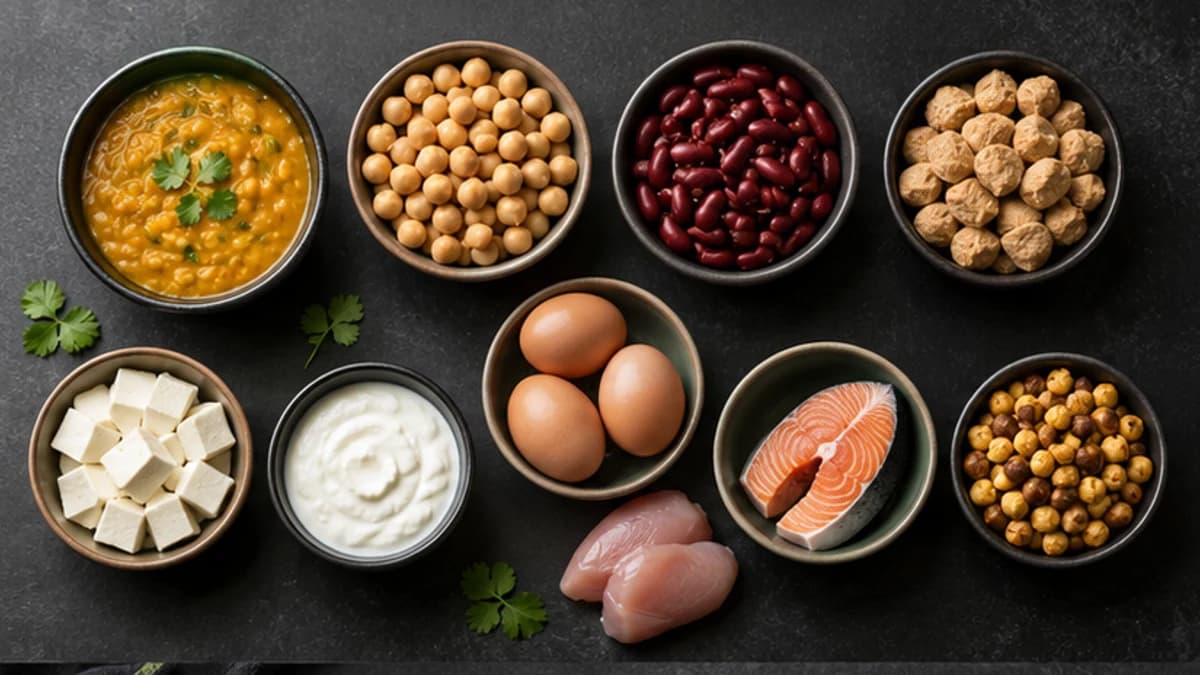
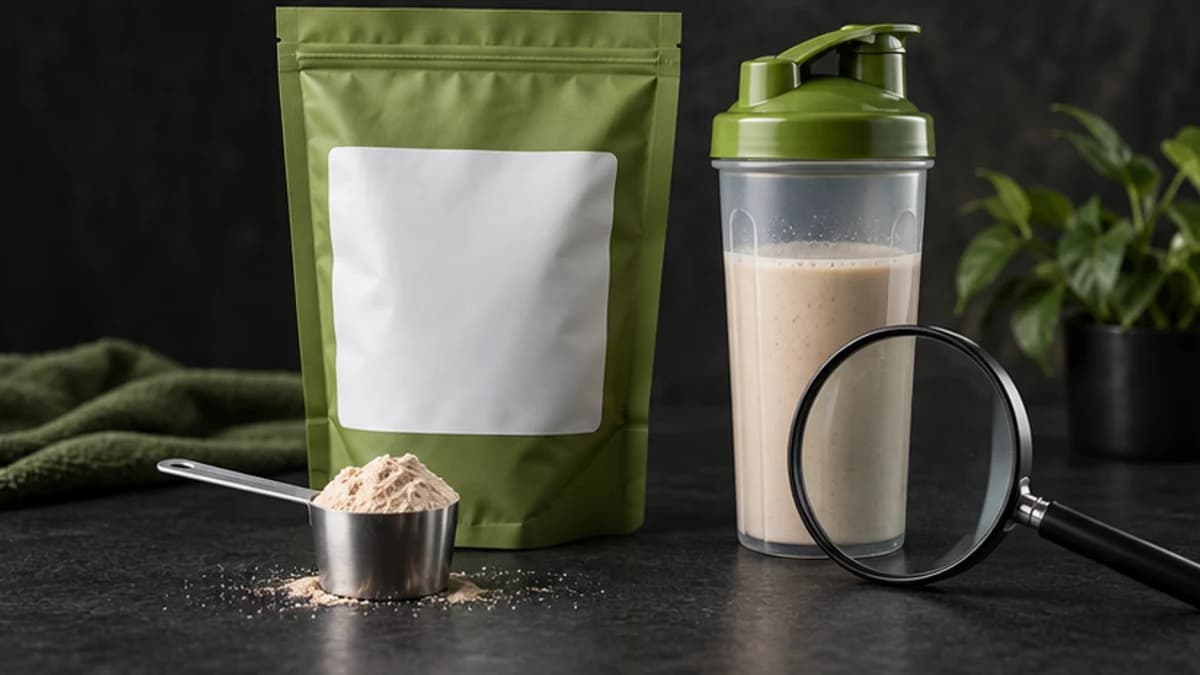
Read serving size, protein amount, ingredients, allergens and manufacturer details before front-label promises. A scoop of powder is not the same weight of protein.
How to Read a Protein Powder Label Before Buying
Nutrition · 26 October 2026
Check the arithmetic first
Identify whether values are per 100 g, per serving or both. Find serving weight and protein in that serving. For a hypothetical 30 g serving with 24 g protein, the protein is 24 g, not 30 g. This is an example, not a tested product or dose recommendation.
The FSSAI regulations are the Indian labelling reference used here. Rules depend on product category; this consumer checklist is not a legal compliance certificate.
Seven things to inspect
- Serving weight and servings per pack. A heaped scoop may not match the stated amount.
- Protein per serving and source, compared on the same basis.
- Ingredient list, sweeteners and anything you do not tolerate.
- Allergen warnings. Whey comes from milk and is unsuitable for milk allergy.
- Other listed nutrients, including energy and sugars; a mass-gainer differs from plain protein.
- Manufacturer/importer, batch, date markings and appropriate FSSAI details.
- Evidence behind claims and whether any independent test covers the actual batch.
A claim is not a guarantee
NIH Office of Dietary Supplements explains that sports supplements vary in evidence and safety, may interact with medicines, and can contain undeclared or prohibited substances. Independent certification can reduce some risks within its scope, not prove necessity or guarantee results.
An FSSAI number is not a guarantee of muscle gain. A celebrity endorsement is not an ingredient analysis. Be wary of promises to cure disease or replace training and balanced meals. Competitive athletes should discuss supplement risk and sport rules with a qualified professional.

Does it solve a real problem?
Review ordinary meals first. If they already meet your needs, powder may add expense without a benefit. If convenience is the reason, compare tolerability, actual protein and cost per stated serving.
Ask a clinician or dietitian before use with kidney disease, relevant health conditions or medicines, pregnancy, or when choosing for a child. Do not casually stack supplements because each is sold separately.
Common questions
Is a bigger scoop better?
No. Compare the actual protein and complete ingredient list.
Does testing mean zero risk?
No. Check the test scope and batch. No certification guarantees personal suitability.
Sources and reading
- FSSAI: Labelling and Display Regulations, September 2025 compilation
- NIH: Supplements for Exercise and Athletic Performance
- ICMR-NIN: Dietary Guidelines for Indians, 2024
General education, not personal medical advice. Cover image is an AI-generated editorial illustration.