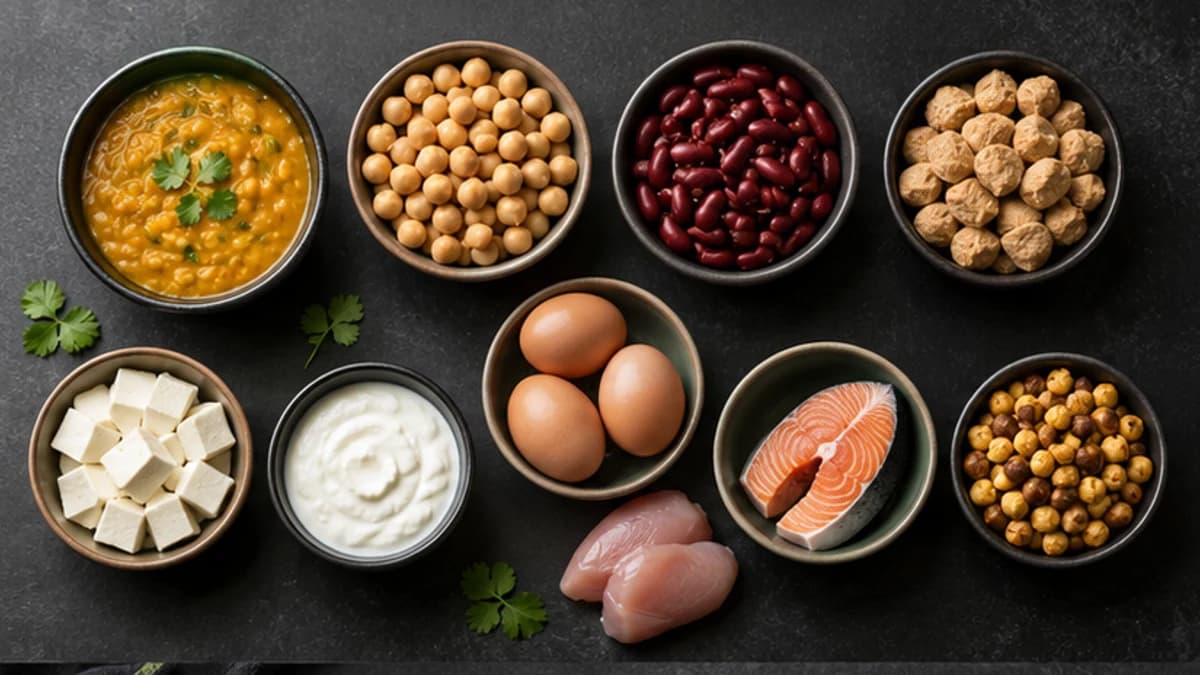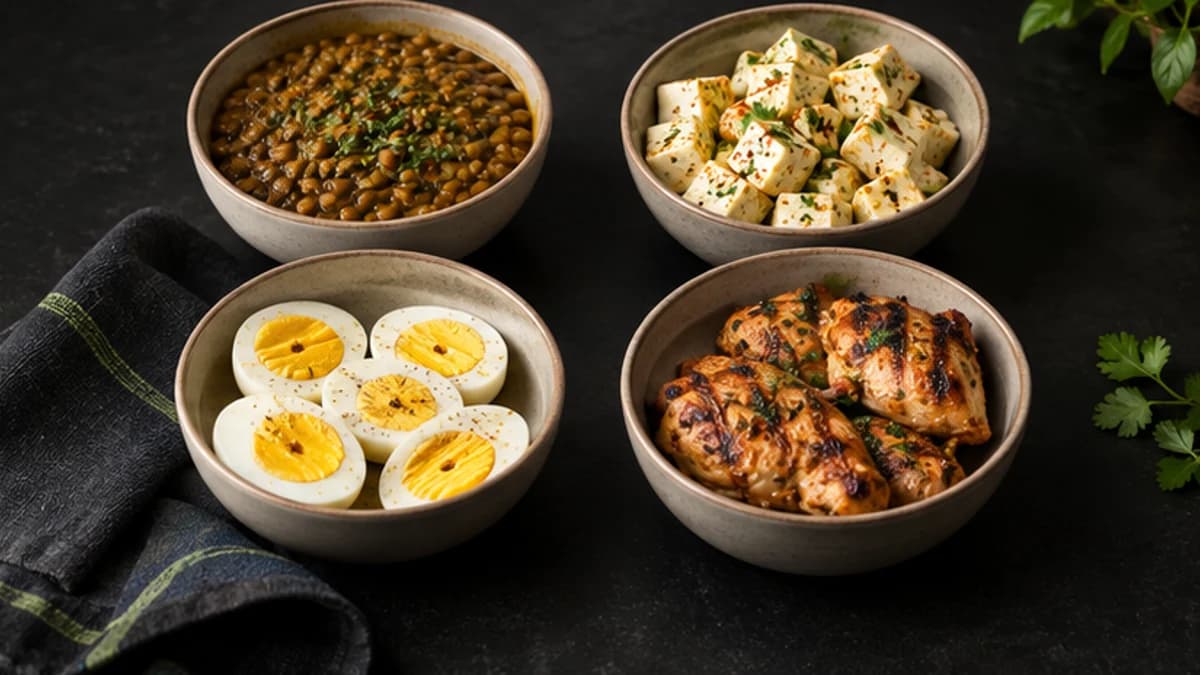
About 100 g protein can be spread across ordinary meals. This example adds up to roughly 99 g from the listed foods, but 100 g is not a target everyone needs.
What 100 Grams of Protein Can Look Like Across a Day
Nutrition · 26 October 2026
An example, not a prescription
Needs differ with body size, age, training, total intake and health. This is meal arithmetic, not a diet to follow. It is not intended for children, pregnancy or anyone requiring a medical diet.
The NHS reference table gives about 27 g protein per 100 g chicken, 12 g for two eggs, 7 g per 200 ml milk, 10 g per 120 g drained lentils or chickpeas, and 6 g per 200 ml soy drink. These approximate values are used consistently below.
One illustrative day
| Meal | Listed foods | Approximate protein |
|---|---|---|
| Breakfast | Two eggs + 200 ml milk | 12 + 7 = 19 g |
| Lunch | 100 g chicken + 120 g drained lentils/chickpeas | 27 + 10 = 37 g |
| Snack | 200 ml soy drink | 6 g |
| Dinner | 100 g chicken + 120 g drained lentils/chickpeas | 27 + 10 = 37 g |
| Total | Only these listed foods | 99 g |
The total is approximately 100 g, not exactly 100. Egg size, products and preparation change the result. The chicken reference does not establish the same value for every cut or recipe.
Make it a complete day of eating
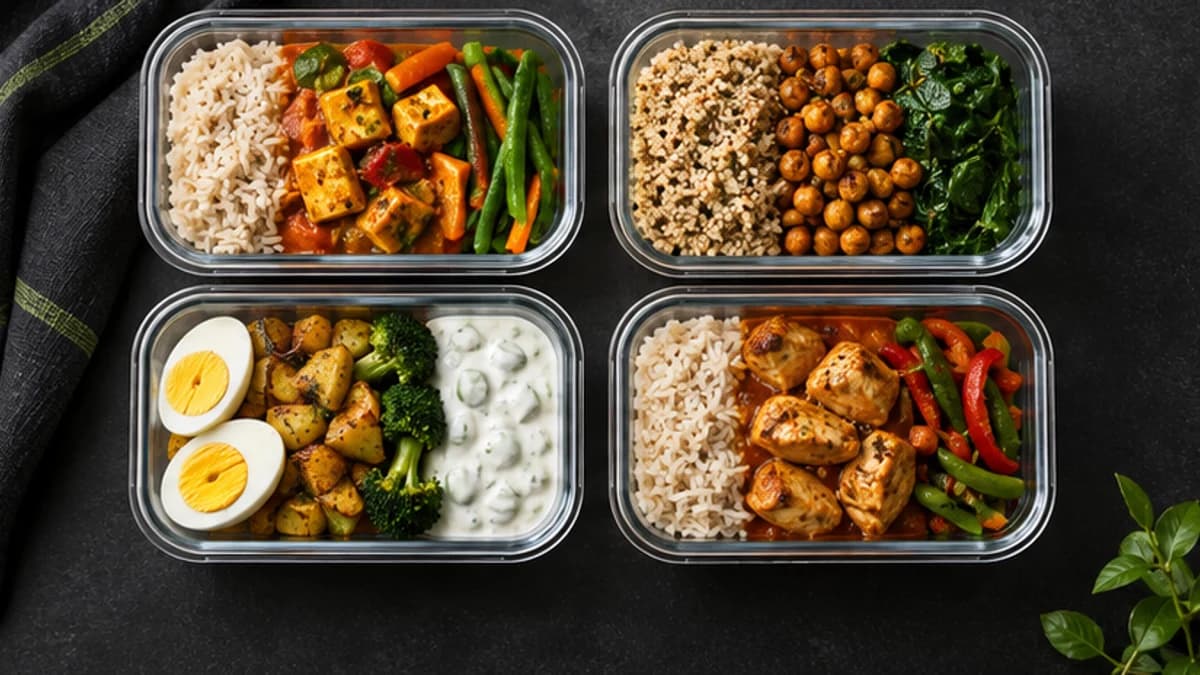
Add suitable rice, roti or another staple, vegetables, fruit and fats. These add energy and may add protein, so the whole day will not necessarily total 99 g. Eating only the table foods would be an incomplete interpretation.
Chicken at two meals is simply a way to show arithmetic, not a recommendation that everyone should repeat it. ICMR-NIN emphasizes variety across food groups. Preferences, allergies, religious choices and appetite should shape your meals.

Recalculate vegetarian swaps
Replace chicken with suitable tofu, paneer, soy foods, dairy or pulses using their own nutrition values. Equal weights are not equivalent protein portions. Ordinary curd is not strained high-protein yogurt, and paneer is not Western cottage cheese.
- Write the edible portion and whether it is dry, cooked or drained.
- Use a matching label or food reference.
- Multiply by portions, then add the meals.
- Review the whole diet rather than making one number the only goal.
Common questions
Is 100 g right for me?
Not necessarily. A dietitian can help assess your individual needs.
Why not round the table to exactly 100?
That would imply false precision. The source portions themselves are approximate.
Sources and reading
General education, not personal medical advice. Cover image is an AI-generated editorial illustration.