Build protein into familiar meals using pulses, dairy, soy, eggs, fish or chicken. Choose foods you enjoy and can prepare regularly, rather than one supposed superfood.
10 High-Protein Indian Foods for Everyday Meals
Nutrition · 26 October 2026
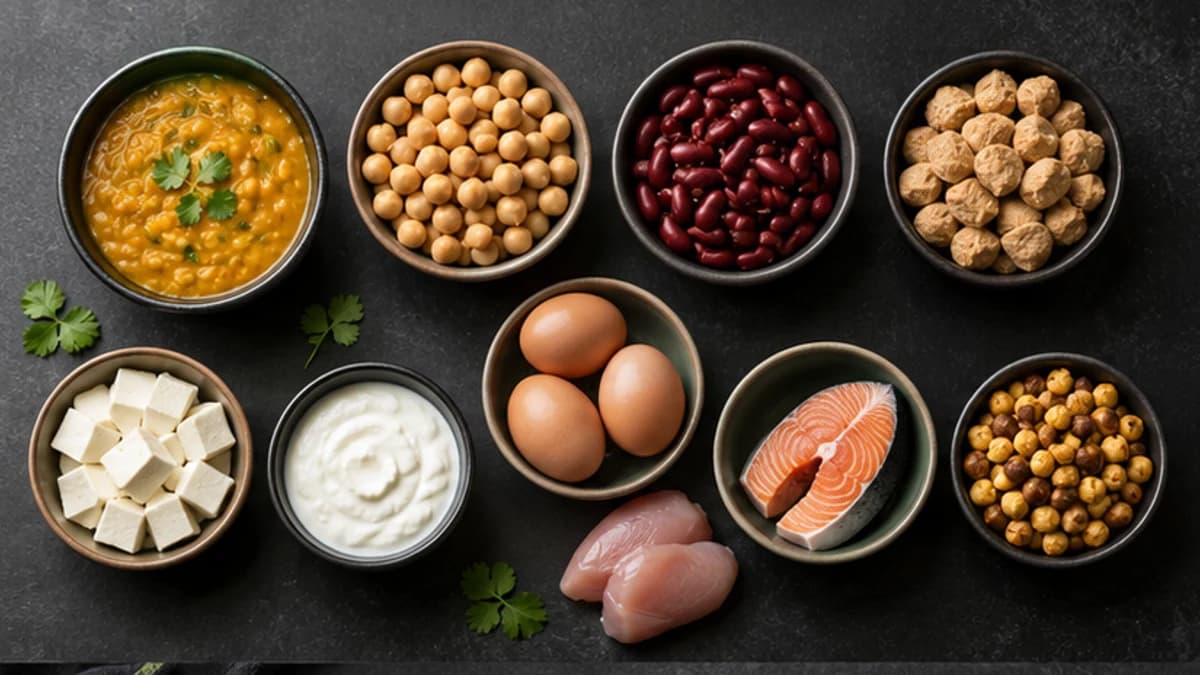
Ten foods to rotate
These are useful protein-containing foods in everyday language, not a regulated high-protein claim for every recipe. ICMR-NIN recommends a varied food pattern rather than chasing one nutrient.
- Dal: keep a familiar pulse ready for rice or roti. A watery bowl has less pulse per spoon than thick dal.
- Chickpeas: use cooked chana in chaat, curry or a lunchbox. Add vegetables for variety.
- Rajma: count the beans you actually eat, not the volume of gravy.
- Soy chunks: compare the dry package serving with your recipe. Rehydrated weight is not dry weight.
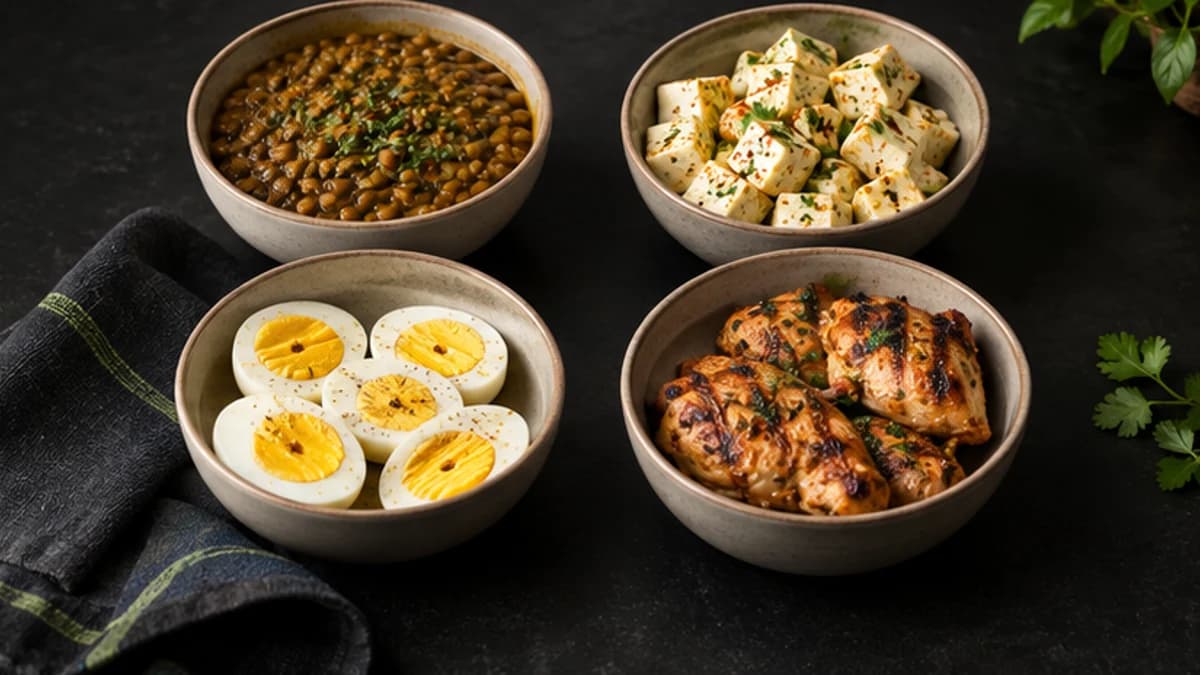
- Tofu: add to bhurji or vegetables. Water and protein content vary by product.
- Paneer: useful for vegetarian meals, but check the actual label and portion.
- Milk and curd: useful if tolerated. Ordinary curd and strained yogurt are not nutritionally interchangeable.
- Eggs: convenient boiled or in bhurji; cooking oil and accompaniments still matter.
- Chicken: use the edible portion. Bone-in weight is not the same as boneless meat.
- Fish: choose a suitable local option; species and preparation change the estimate.
Compare portions honestly
The NHS food table gives approximate examples: two eggs about 12 g protein, 200 ml milk about 7 g, 120 g drained lentils or chickpeas about 10 g, and 100 g chicken about 27 g. These are reference portions, not measurements of your recipe.
Never compare dry pulses with cooked meat as though both were ready-to-eat portions. Cooking changes water content and weight. Use a matching entry or the product label. Paneer is not Western cottage cheese, so do not borrow its values.
Turn the list into meals
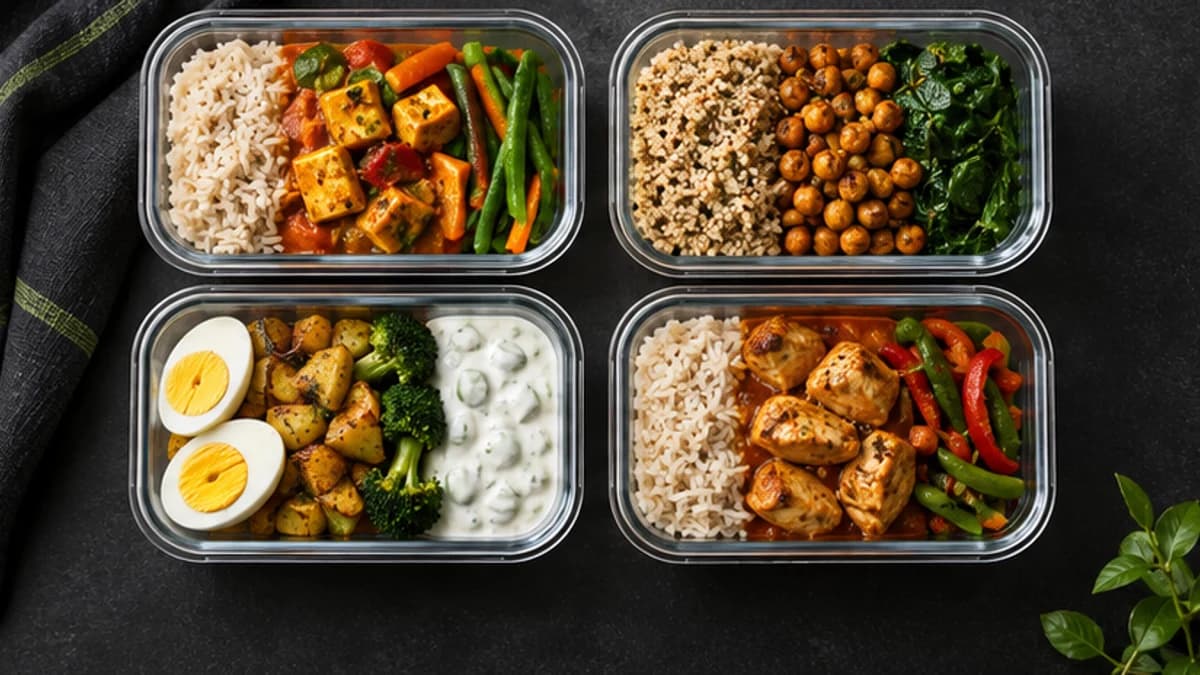
- Breakfast: eggs with toast, or tofu/paneer bhurji with roti.
- Lunch: rajma or chana, rice, vegetables and curd if suitable.
- Dinner: dal, a preferred additional protein food, vegetables and a staple.
These combinations are examples, not a complete diet. Choose two or three reliable options for the week. Add fruit, vegetables, grains and appropriate fats rather than making every meal protein alone.

Your next step
Give your chosen foods repeatable portions and notice whether the routine fits your appetite and budget. Allergies, dietary choices and medical advice take priority. With kidney disease or a prescribed diet, ask your clinician or dietitian before deliberately increasing protein.
Common questions
Do I need all ten every day?
No. Variety can happen across the week.
Do I need protein powder?
Not automatically. Food can supply protein; powder is a convenience, not a replacement for a varied diet.
Sources and reading
General education, not personal medical advice. Cover image is an AI-generated editorial illustration.