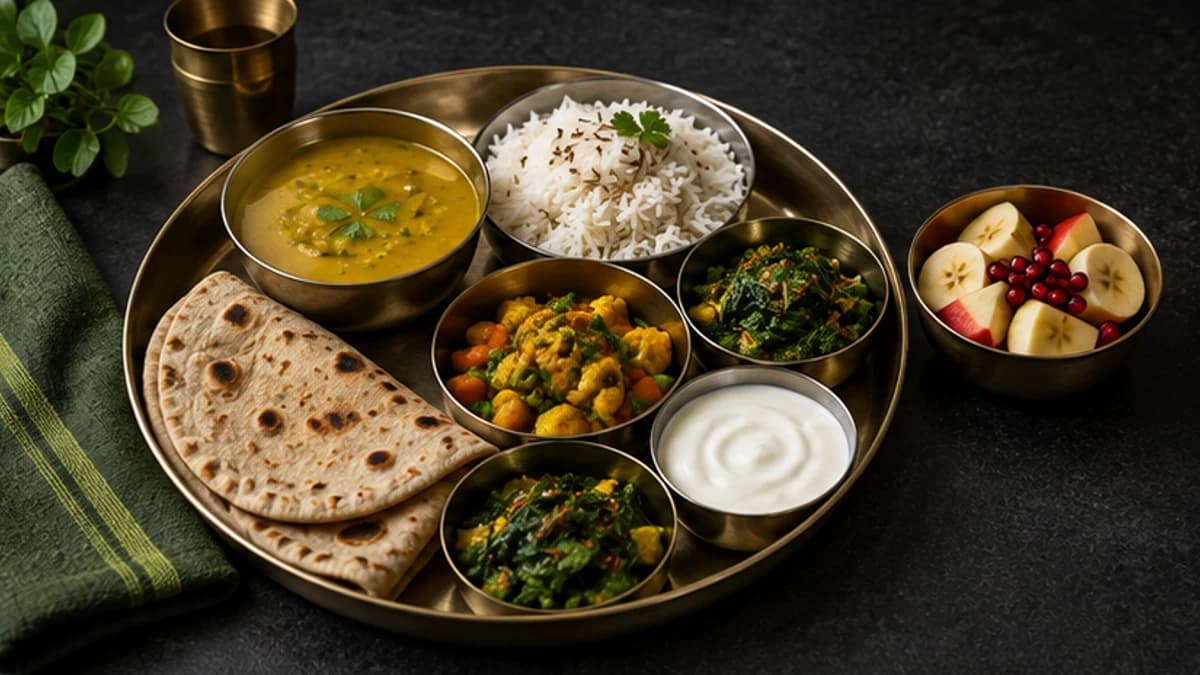
Build a training-friendly thali from a staple, a meaningful protein dish, vegetables and suitable additions such as curd or fruit. One plate diagram is not a universal diet.
Building a Balanced Indian Thali Around Your Training
Nutrition · 26 October 2026
Keep the pattern broad
ICMR-NIN 2024 emphasizes varied foods. Avoid making the entire meal either rice or protein. Different foods contribute different nutrients and textures.
- Staple: rice, roti, millet or another familiar grain.
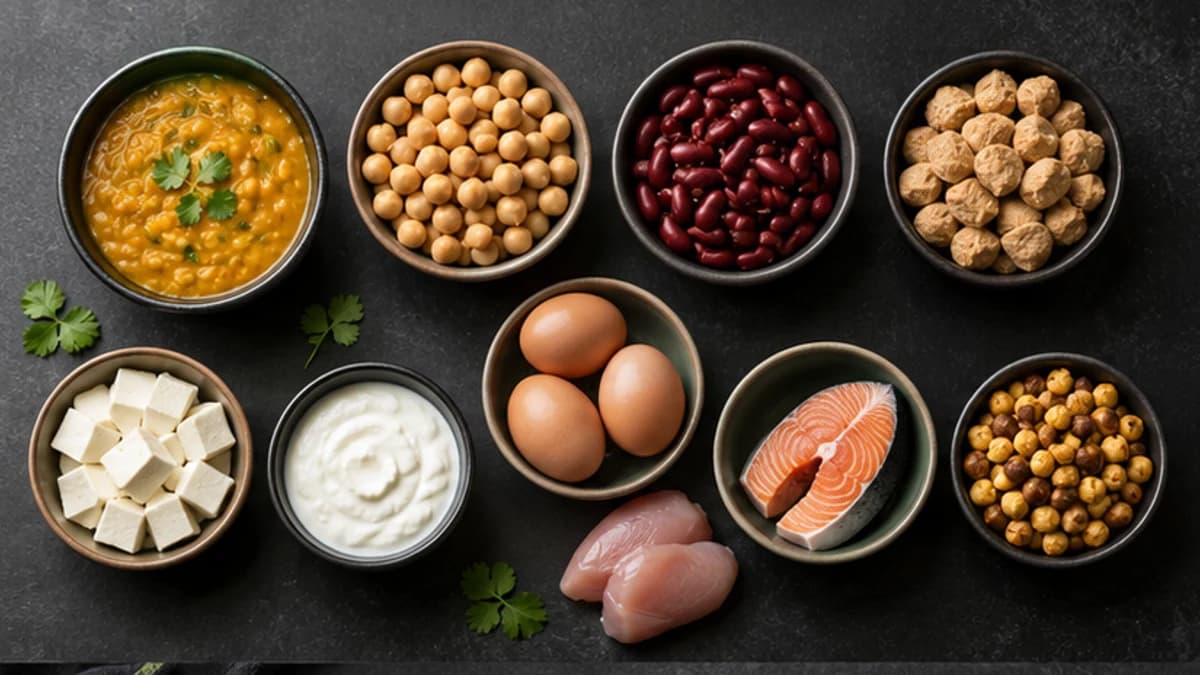
- Protein dish: pulses, soy, tofu, paneer, eggs, fish or chicken according to preference.
- Vegetables: variety across meals, including leafy vegetables where suitable.
- Other additions: plain curd or a suitable alternative, fruit across the day and appropriate fats.
Three versions of one structure
| Pattern | Illustrative meal | Check |
|---|---|---|
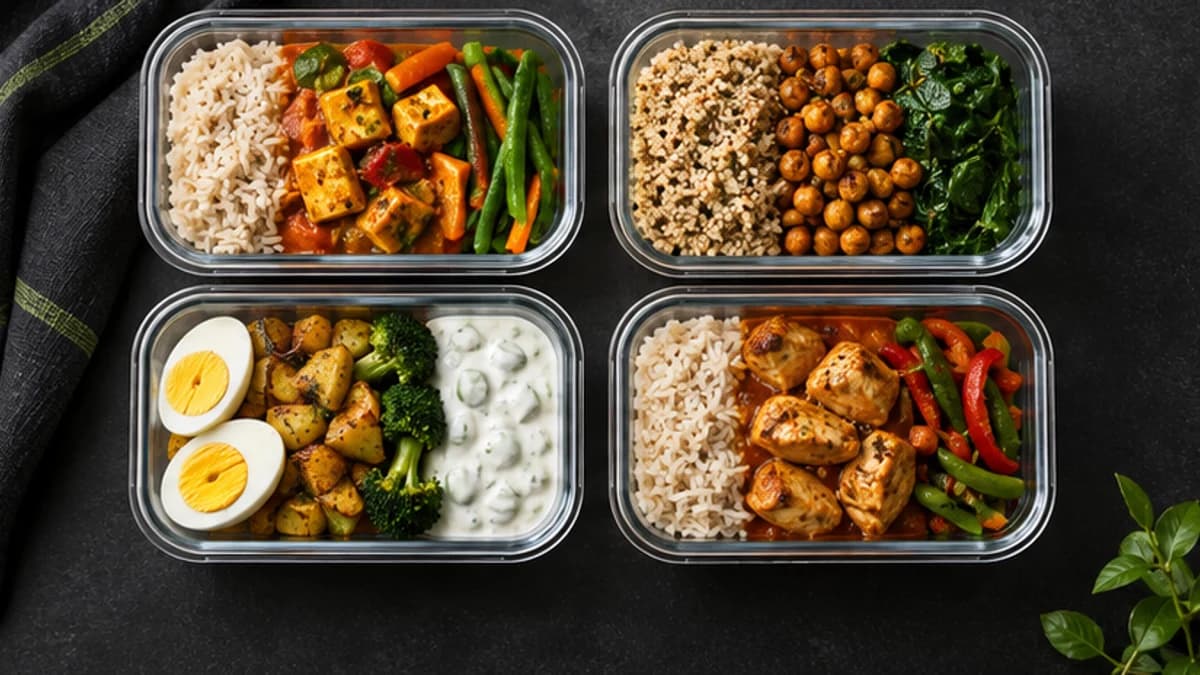
| Vegetarian | Roti, dal, paneer/curd and vegetables | Enough actual pulse or paneer, not only gravy |
| Vegan | Rice, rajma/chana, tofu/soy and vegetables | Overall adequacy, including B12 planning |
| Includes animal foods | Rice/roti, fish/chicken/egg, dal and vegetables | Edible portions and preparation |
These are unmeasured examples, not calorie or protein targets. Allergies, availability, culture, medical needs and appetite should shape the plate.
Adjust around training
If a large meal feels uncomfortable before exercise, change timing or portion and eat the rest later. Mayo Clinic advises more digestion time for larger meals and lighter food close to training. Rice and roti do not need to be banned.
After exercise, the same ordinary balanced meal may be suitable. More training does not automatically require supplements. Consider the full day, session demands and recovery.

Make portions understandable
- Use familiar vessels and consistent descriptions.
- Give the protein dish more than a garnish-sized role.
- Include vegetables rather than relying on a tiny salad all day.
- Consider cooking oil, fried extras, sweet drinks and desserts in the full meal.
- Adjust through appetite, recovery and qualified advice, not guilt.
A thali is a flexible meal format, not treatment for diabetes, kidney disease or another condition. Follow your healthcare team's individual plan when needed.
Common questions
Must I remove rice?
Not automatically. Portion, preparation and the full meal matter.
Does every thali need paneer?
No. Choose suitable protein foods that fit your needs and preferences.
Sources and reading
General education, not personal medical advice. Cover image is an AI-generated editorial illustration.