Ask someone mid-workout what they lifted last week and watch their face. Most people genuinely do not know. That small gap between "I think" and "I know" is exactly where months of training produce nothing, because progress depends on doing slightly more than last time, and you cannot beat a number you never wrote down.
How to Track a Workout
Workout Tracking · 19 October 2026
Why tracking beats memory
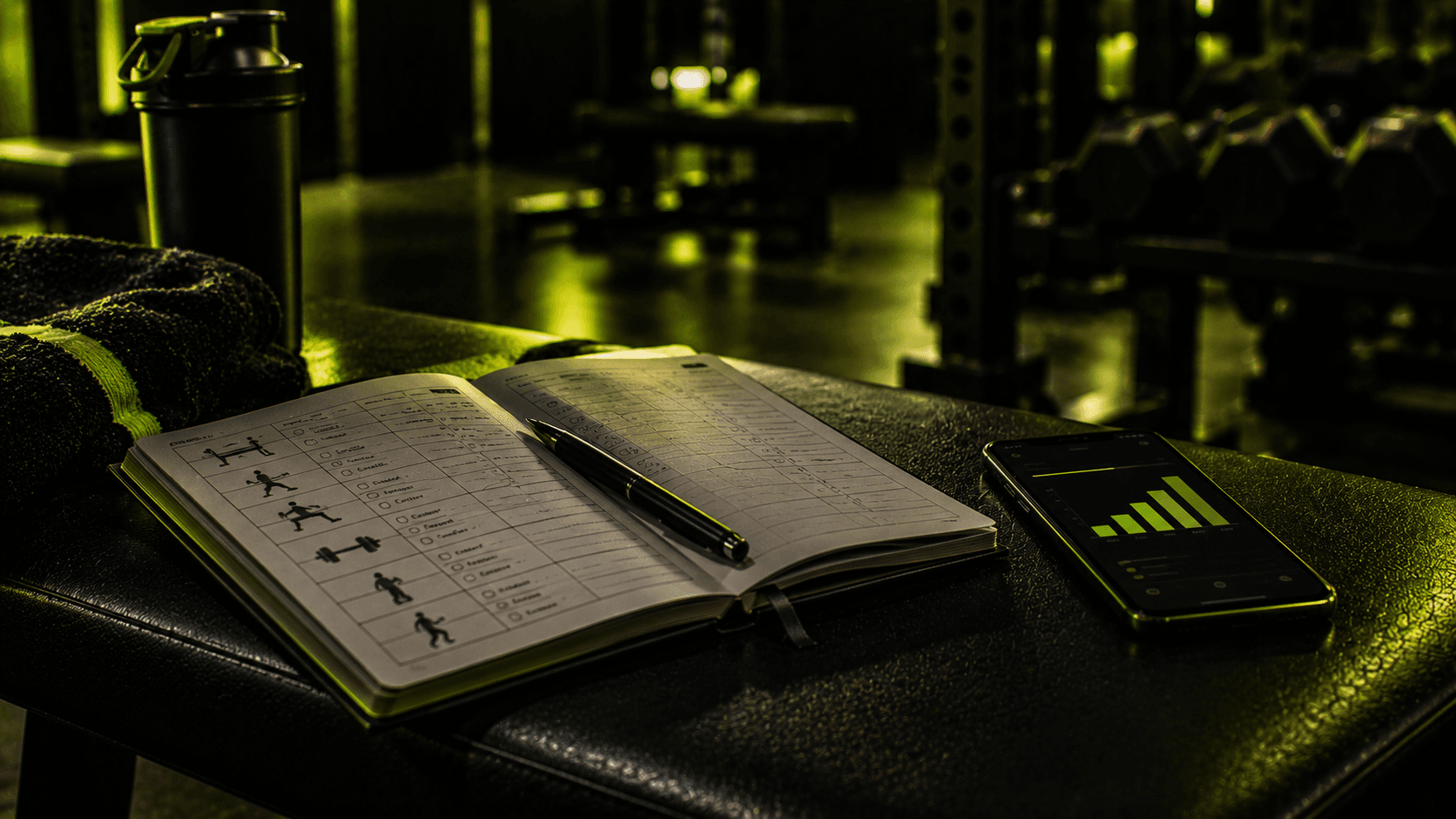
Memory compresses. Two similar sessions blur together, and you default to whatever weight feels familiar. Familiar is comfortable, and comfortable does not grow muscle. A written log turns every session into a target: last time you squatted 8 reps at a given weight, so today the goal is 9. That tiny, repeated edge is what six months of progress is made of.
What to write down
Keep it minimal or you will quit by week two. For each exercise: the name, the weight, and the reps per set. Add one optional note when something matters: "last rep ugly", "felt easy, go up next time". That is the whole system. Anything beyond it, like rest times or heart rate, is optional decoration until the basics are a habit.
Paper, notes app, or a tracking app
Paper works and never runs out of battery, but it cannot show you trends and it gets lost. A notes app is searchable, but you end up formatting instead of training. A purpose-built tracker does the useful parts for you: it remembers your last session per exercise, shows your history per lift, and makes "beat last time" visible before you touch the bar. That is exactly what FitHit's workout log is built around, including a record that stays yours when you change gyms.

How to use the log to progress
Before each exercise, glance at last time and set today's target: one more rep, or a small weight increase. After the session, scan the week. Lifts that climbed get the same treatment next week. Lifts stuck for three or more sessions get a change: more sleep, more food, or a different rep range. Without the log, all of this is guesswork. With it, plateaus become readable.
How much detail is enough?
Exercise, weight, reps. That covers what you need to progress. Add notes only when they change what you will do next session.
Should I track cardio too?
Yes, but simply: activity, duration, and one intensity marker like distance or level. The point is noticing the trend, not building a spreadsheet.
What if I keep forgetting to log?
Log between sets, not after the workout. Rest periods are dead time anyway, and the habit sticks when it borrows a slot that already exists.