Training is the easy half of getting stronger. You stress the muscle in the gym, and your body rebuilds it stronger afterwards, mostly while you sleep. Lifters obsess over the first half and treat the second as dead time. Then they wonder why the person with the worse program and the better sleep passes them in six months.
Sleep and recovery: the training you do not see
Recovery · 2 October 2026
Muscle is built between sessions
A workout does not build anything. It creates damage and a signal. The building happens over the next day or two, powered by food and deep sleep, when growth-related hormones peak and tissue repair runs hardest. String together hard sessions without recovery and you get the signal without the rebuild, which looks like feeling tired, lifting the same weights for weeks, and catching every cold that passes through the office.
What poor sleep does to training
Even a few nights of short sleep measurably reduce strength and coordination the next day, slow reaction time, and raise injury risk. Chronic short sleep does worse: it shifts hormones toward muscle loss and fat gain, so the same diet and training produce worse results. People respond by buying pre-workout. The cheaper, more effective supplement is an extra hour in bed.
A simple evening routine
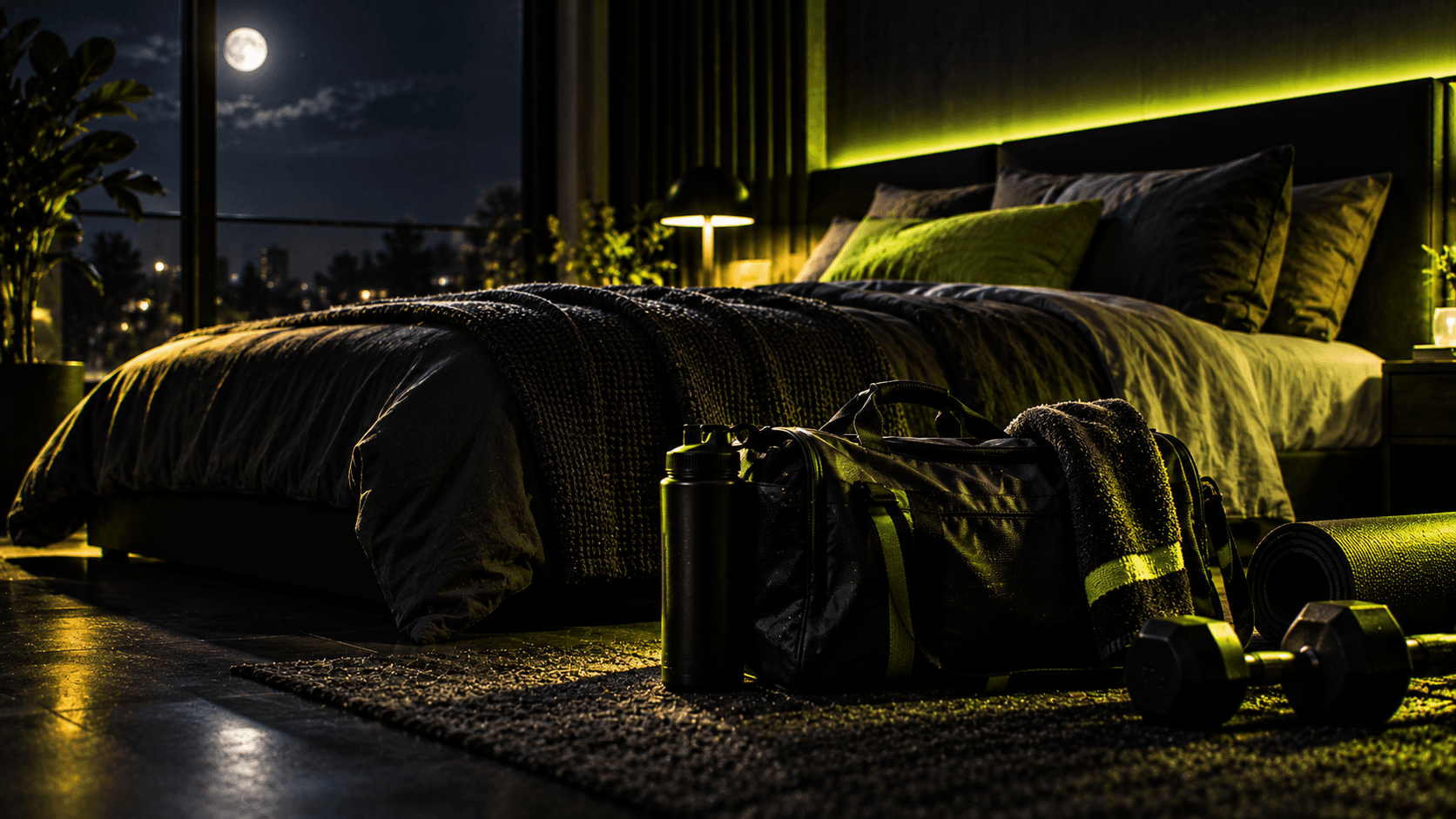
Sleep responds to routine more than to hacks. Keep a fixed wake time, even on weekends, because it anchors the whole cycle. Cut caffeine after mid-afternoon; its half-life is longer than most people think. Dim screens and bright lights in the last hour. Keep the room cool and dark. And keep the phone away from the bed, because "five more minutes" of scrolling is where sleep actually goes. None of this is exotic. All of it compounds.

Rest days and deloads
Plan rest like you plan training. At least one or two full rest days a week, and every six to eight weeks of hard training, a lighter week with reduced weights or volume. A deload is not quitting; it is how joints, tendons and motivation catch up with muscles. Lifters who schedule easy weeks rarely need forced ones from injury or burnout.
How many hours do I need?
Most adults training hard do best at seven to nine hours. The honest test is simpler: if you need an alarm war every morning and crash on weekends, you are running a deficit.
Is training late at night bad?
For most people, a late session is better than no session. If intense evening training leaves you wired, finish at least two hours before bed and keep that session lighter.
Do naps count?
Yes. A 20 to 30 minute afternoon nap improves alertness and can take the edge off a short night. What naps cannot do is replace a consistently short night.