With 30 minutes, protect the main goal, suitable warm-up and rest, then remove lower-priority work. Shorter training does not have to become a rushed circuit.
How to Adapt a Workout for a Client With Only 30 Minutes
Trainers · 26 October 2026
Clarify the available time
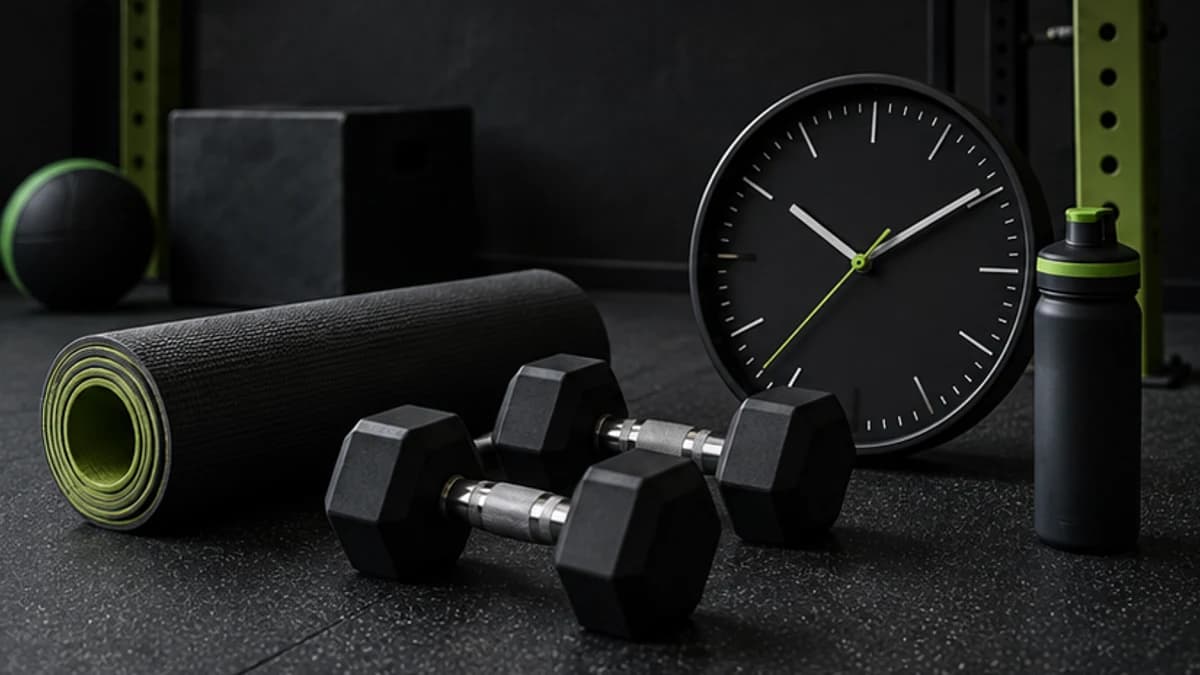
Does 30 minutes mean training time, or does it include changing and travel? Confirm equipment, screening and the session goal. General strength and a session constrained by rehabilitation advice cannot be compressed in the same way.
The ACSM 2026 review emphasizes regular participation and individualization in healthy adults. A feasible programme is more useful than complexity the client cannot complete.
An illustrative budget
| Part | Example time | Purpose |
|---|---|---|
| Preparation | 5 minutes | General and exercise-specific preparation |
| Priority work | 18 minutes | Suitable main exercises with planned rest |
| Optional work | 4 minutes | Only if priority work is complete |
| Finish | 3 minutes | Comfort check, record and next plan |
This is a 30-minute planning example, not a universal prescription. Some clients need more preparation or rest. Remove optional work rather than skipping necessary safety steps.
Do fewer things well
- Select movements that serve the goal and match ability.
- Use familiar exercises where suitable to limit setup and teaching time.
- Prepare equipment alternatives for a busy gym.
- Keep rest appropriate to effort. Pair exercises only if technique and recovery are preserved.
- End on time rather than hiding a 50-minute plan under a shorter label.
The ACSM outline supports matching exercise mode and training variables to the individual. Every session need not contain every possible exercise.

Review the wider week
Distribute important work across realistic sessions. Do not promise identical outcomes from every schedule. If time repeatedly runs out, change the written programme instead of blaming the client.
Record what was actually completed. Progress when the response supports it, not because a short session feels as though it must be compensated for with harder work.
Common questions
Should I cut every rest period?
No. That changes performance and may affect technique. Remove lower-priority work first.
Can short sessions count?
Yes. Suitable focused sessions can contribute; consistency and the whole programme matter.
Sources and reading
- ACSM 2026 Position Stand: Resistance Training in Healthy Adults
- ACSM: Personal Trainer Exam Content Outline, effective July 2025
General education, not personal medical advice. Cover image is an AI-generated editorial illustration.